Search the content

Monday, December 1, 2025

back working out

Back Exercises — Gym Guide

Back Exercises in the Gym

Balanced back training builds strength, improves posture, and reduces injury risk by targeting lats, traps, rhomboids, erector spinae, and stabilizers.

Back Exercises-

The back is a large muscle group made up of the latissimus dorsi (lats), trapezius (traps), rhomboids, erector spinae, and smaller stabilizing muscles. A balanced back workout should target width and thickness.

Overview

Popular exercises include the Lat Pulldown for width, Pull-Ups for overall development, Seated Cable Rows for thickness, and Bent-Over Barbell Rows as a compound movement that engages the lower back and core. Maintain a neutral spine, controlled tempo, and full range of motion for best results.

Exercises (Detailed)

a) Lat Pulldown

Benefits, Form, and Tips

The lat pulldown primarily targets the latissimus dorsi (lats)—the large muscles responsible for back width and upper-body pulling strength. It also engages the biceps, trapezius, and rhomboids, making it an excellent compound movement for back development.

Benefits of Lat Pulldown

  • Builds a wide, strong back and improves posture.
  • Strengthens pulling muscles, aiding in chin-ups and deadlifts.
  • Helps reduce the risk of shoulder injuries by improving stability.
  • For best results, include lat pulldowns in your routine 2–3 times per week with proper form.
Form tips:
  • Sit tall with chest up and shoulders down and back.
  • Use a wide grip and pull the bar to the upper chest while squeezing the lats.
  • Avoid leaning back excessively or using momentum.
  • Control the eccentric (release) phase—don’t let the bar snap back up.
For more

b) Close-Grip Lat Pulldown

The Close Grip Lat Pulldown uses a V-bar or close-grip handle and emphasizes the middle back, lower lats, and biceps—helpful for building thickness and improving the V-shape.

How it works

Compared to the wide-grip pulldown, the close grip allows you to pull the weight closer to your body, activating the inner lats and mid-back muscles more intensely. The closer hand position increases range of motion and improves overall pulling strength.

Muscles Targeted

  • Latissimus Dorsi (Lower & Middle Lats)
  • Rhomboids
  • Teres Major
  • Middle Trapezius
Form tips:
  • Keep chest up and draw your elbows down and back.
  • Pull the handle to the sternum or upper abdomen, not behind the neck.
  • Use a full range of motion and avoid shrugging the shoulders.

c) Machine Row (Seated/Plate-Loaded Row)

The Machine Row—also called the Seated Row Machine or Hammer Strength Row—is performed on a cable or plate-loaded rowing machine. It targets the middle and upper back, engaging lats, traps, and rear delts.

What this exercise does

Machine rowing builds back thickness, improves posture, and strengthens pulling muscles. Because the machine guides motion, it helps beginners maintain proper form and reduces injury risk.

Muscles Targeted

Primary Muscles
  • Middle Back (Rhomboids)
  • Latissimus Dorsi (Lats)
  • Middle Trapezius
Secondary Muscles
  • Rear Deltoids
  • Biceps
  • Forearms
  • Lower Trapezius
Form tips:
  • Sit with a neutral spine and drive the elbows back while squeezing the shoulder blades together.
  • Avoid rounding the lower back—keep your core engaged.
  • Use a controlled tempo, focusing on a strong contraction at the top of the movement.

General Tips

  • Balance width (lat-focused) and thickness (row-focused) exercises in each training cycle.
  • Use progressive overload—slowly increase weight, reps, or volume over time.
  • Prioritize form over ego; avoid excessive momentum or cheating repetitions.
  • Include pulling variations (wide, close, neutral grips) to target the back from different angles.
  • Allow 48–72 hours between intense back sessions for recovery, depending on volume and intensity.

This guide is based on back muscles and exercise .

What are the best back exercises?
The article provides a list of popular back exercises including Lat Pulldown, Pull-Ups, Seated Cable Rows, and Bent-Over Barbell Rows.

How to improve back strength?

The content discusses various exercises that build back strength and emphasizes the importance of balanced training.

What muscles are targeted in back workouts?

The article details the major muscles involved in back exercises, including lats, traps, rhomboids, and erector spinae.

What is the importance of back training?

The introduction highlights the benefits of balanced back training, including strength building, posture improvement, and injury risk reduction.

Sunday, November 23, 2025

romanian deadlift

Differece b/w Conventional Deadlift and Romanian Deadlift (RDL)
romanian deadlift

Overview

The Romanian Deadlift (RDL) is exercise that targets the hamstrings, glutes and lower back. Unlike the conventional deadlift, the RDL emphasizes a controlled eccentric (lowering) phase and keeps tension on the posterior chain — making it excellent for strength, hypertrophy

Muscles Worked

  • Hamstrings: primary mover, works under stretch.
  • Glutes: engaged during the lockout.
  • Erector spinae (lower back): stabilizes the spine isometrically.
  • Core & Grip: support and control the movement.

Common Mistakes

  • Rounding the lower back — keep a neutral spine.
  • Turning the RDL into a squat — maintain the hinge.
  • Letting the bar drift away from legs — keep it close.
  • Using excessive weight before mastering form.
Feature Romanian Deadlift (RDL) Conventional Deadlift
Starting Position Standing with bar in hands Bar starts on the floor
Knee Bend Slight bend More bend (half-squat)
Main Movement hinge (hips go back) Legs + hinge lift the weight
Bar Touches Floor? No Yes
Primary Muscles Hamstrings, glutes Back, quads, glutes, whole body
Weight Used Moderate Heavy
Goal Build hamstrings & hinge form Build full-body strength
Range of Motion Short (to shin level) Full lift from floor to standing
Technique Focus Stretch + control Power + strength

Useful Variations

  • Dumbbell RDL: Dumbbell Romanian Deadlift (Dumbbell RDL) is a hinge exercise that strengthens the hamstrings, glutes, and lower back. Hold a dumbbell in each hand, keep your knees slightly bent, Lower the dumbbells along your legs until you feel a stretch in your hamstrings, keeping your back straight and core tight. Then return to standing . Dumbbell RDLs improve posterior-chain strength, balance, and stability while allowing a greater range of motion compared to the barbell version. They are excellent for beginners and for building muscle with controlled form.

  • Single-leg RDL: corrects imbalances and improves balance.

  • Trap-bar RDL:. It targets the hamstrings, glutes, and lower back while reducing stress on the spine thanks to neutral hand positioning. Begin standing inside the bar, hinge your hips back, lower the bar to shin level, and stand tall. It builds strength with safer mechanics. .

  • See Also
  • Snatch-grip RDL: The wider grip increases upper-back and trap engagement while still targeting the hamstrings and glutes. Hinge , lower the bar to mid-shin with a straight back, and stand tall. It builds strength, stability, and posterior-chain control.

Programming Tips

Use RDLs as an accessory lift: 3–5 sets of 4–10 reps for strength, or 8–12+ reps for hypertrophy. Pair with squats or leg presses on separate days to avoid excessive fatigue. Prioritize technique and progressive overload.

Quick Routine Example

Day A
3x5 heavy RDL (2s down, 1s up)
3x8 Romanian Split Squats
2x12 Hamstring curls

Thursday, November 13, 2025

biceps exercises at gym

Biceps Exercises at the Gym: A Complete Guide

Biceps Exercises at the Gym:

Defined arms with the best biceps workouts and techniques.

Anatomy of the Biceps

The biceps brachii is a two-headed muscle located at the front of your upper arm. It includes:

  • Long Head: Runs along the outer arm and contributes to the biceps' peak. The long head of the biceps brachii originates from the supraglenoid tubercle of the scapula and runs through the shoulder joint, traveling down the outer side of the upper arm. It contributes significantly to the biceps’ distinctive peak and plays an important role in shoulder stability. This head helps with elbow flexion, forearm supination, and shoulder flexion, assisting in lifting or curling movements. Because it crosses both the shoulder and elbow joints, the long head is active during multi-joint exercises. Training it effectively involves movements with a narrow grip or exercises emphasizing the stretch at the bottom of a curl.

  • Short Head: Lies on the inner side, adding to the muscle’s thickness.

The biceps are responsible for elbow flexion (bending the arm), forearm supination (turning the palm upward), and shoulder flexion (lifting the arm forward).The short head of the biceps brachii originates from the coracoid process of the scapula and runs along the inner side of the upper arm, merging with the long head to attach to the radius bone in the forearm. It gives the biceps muscle its overall thickness and fullness, especially when viewed from the front. Functionally, it assists in elbow flexion, forearm supination, and shoulder flexion, just like the long head. However, the short head is more active in exercises with a wider grip or those that bring the arms in front of the body, enhancing inner arm development and strength.

Why Train the Biceps?

Training your biceps offers several key benefits:

  • Improved Strength and Function: Helps with lifting, pulling, and carrying tasks.It feels good when your arm size is bigger than usual.
  • Enhanced Aesthetics: Adds balance and visual appeal to your upper body.
  • Better Performance: Supports other lifts like pull-ups, rows, and deadlifts.For daly physicall activity ,it enhance for better outputs
  • Injury Prevention: Promotes muscular balance and joint stability.

Top Biceps Exercises at the Gym

See Also

Here are some of the most effective biceps exercises you can perform in the gym:

a

1. Barbell Bicep Curl

The classic biceps builder. Keep your elbows close to your torso and curl the barbell up while contracting your biceps.

2. Dumbbell Alternating Curl

Work each arm individually for balanced growth. Rotate your wrist as you lift to engage the biceps fully.

3. Hammer Curl

Performed with a neutral grip, hammer curls target both the biceps and brachialis for thicker arms.

In Details

4. Preacher Curl

Isolate your biceps by using a preacher bench. This variation reduces momentum for strict muscle contraction.

5. Cable Curl

Keeps constant tension on the muscle throughout the range of motion. Great for maximizing the pump.

Tuesday, November 4, 2025

back arm exercise

Triceps Exercise — Definition

Published

Triceps exercises are workouts that strengthen and develop the triceps brachii — the large muscle at the back of your upper arm. Any movement that helps you straighten your elbow works this muscle.

Why Triceps Matter

Triceps make up about two-thirds of your upper arm’s size. Strong triceps improve arm shape, pressing strength, and stability in pushing movements.

In short: Triceps exercises make your arms stronger, bigger, and better balanced.

Where You Can Do Them

  • Dumbbells (e.g., Overhead Triceps Extension)
  • Barbells (e.g., Close-Grip Bench Press)
  • Cable Machines (e.g., Triceps Pushdown)
  • Bodyweight (e.g., Dips, Push-Ups)

1. Dumbbells

Dumbbells let each arm work independently, helping correct muscle imbalance.

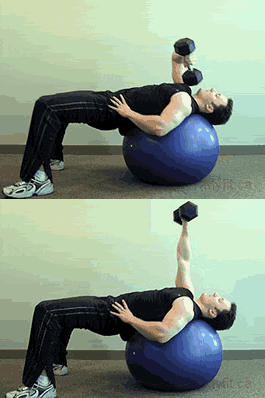
Overhead Triceps Extension: Hold dumbbell overhead, lower behind head, then raise back up. Tip: Keep elbows in, avoid arching back.

2. Barbells

Close-Grip Bench Press: Lie on a flat bench, grip shoulder-width, lower bar to mid-chest, and press up.

Skull Crushers: Lie on a bench, lower bar toward forehead, extend back up. Do 8–15 reps.

3. Cable Machines

Cables give constant resistance through the movement, increasing muscle activation.

Overhead Cable Extension

Triceps Pushdown: Stand facing the machine, hold rope/bar, push down while keeping elbows close.

4. Bodyweight

Dips: Use parallel bars or a sturdy chair, lower body to 90°, then push up.

Diamond Push-Ups: Hands together under chest in diamond shape, lower chest, and push up.

Benefits of Regular Triceps Training

  • Improves arm shape and tone
  • Boosts pressing power (bench press, dips)
  • Supports shoulder and elbow stability

Sunday, October 19, 2025

gym equipment

Gym Equipment: A Complete Info-

When it comes to fitness and bodybuilding, gym equipment plays a vital role in helping individuals achieve their health goals. Whether your aim is weight loss, muscle gain, endurance improvement, or overall fitness, using the right gym equipment makes workouts more effective and safe. Broadly, gym equipment is divided into cardio equipment and strength training equipment. Let’s explore them in detail.

1. Cardio Equipment

Cardio equipment is designed to increase heart rate, burn calories, and improve cardiovascular health.

  • Treadmill: A treadmill is a popular gym equipment used for walking, jogging, or running indoors. It helps improve cardiovascular health, burn calories, increase stamina, and support weight management. Treadmills offer adjustable speed and incline, making workouts suitable for beginners and advanced fitness enthusiasts alike.
  • Elliptical Trainer: An elliptical trainer is a low-impact gym machine that provides a full-body workout. It combines walking, running, and stair climbing motions while reducing stress on joints. Ellipticals improve cardiovascular fitness, burn calories, enhance endurance, and engage both upper and lower body muscles effectively.
  • Rowing Machine: Works both upper and lower body, improves stamina and posture.A rowing machine is a full-body fitness equipment that simulates the motion of rowing a boat. It strengthens muscles of the arms, legs, back, and core while improving cardiovascular endurance. Rowing machines are low-impact, help burn calories efficiently, and enhance overall strength and stamina of body .
  • Stair Climber: A stair climber is a cardio exercise machine that simulates climbing stairs. It effectively strengthens the legs, glutes, and core while improving cardiovascular fitness. Stair climbers help burn calories, increase endurance, and support weight loss. The low-impact motion reduces stress on joints compared to running.

2. Strength Training Equipment

Strength training equipment helps build muscle, improve strength, and boost metabolism.

  • Dumbbells: Dumbles is the core equipment for commonly used in most of exercises like Versatile free weights for exercises like curls and presses. this is used in biceps, tripecps,shoulders,back,leg exerises mainly.
  • Barbells: Used for heavy lifts like squats, deadlifts, and bench press.like dumbbles,Barbel is also used for almost all exercises with more havier weight.
  • Weight Plates: Added to barbells for progressive overload.
  • Smith Machine: A guided barbell system for safer squats and presses.
  • Cable Machine: Adjustable pulleys that allow continuous muscle tension.
  • Leg Press Machine: Targets quadriceps, hamstrings, and glutes.
  • Chest Press Machine: Strengthens chest, shoulders, and triceps safely.
  • Lat Pulldown Machine: Focuses on back muscles, especially lats.
  • Pec Deck Machine: Helps in chest isolation and definition.
  • Leg Curl & Extension Machines: Build hamstrings and quadriceps.
  • Ab Crunch Machine: Strengthens the core and abs effectively.

3. Accessories & Functional Training

Along with machines, gyms also provide functional tools and accessories:

  • Resistance Bands – For stretching and strength training.
  • Kettlebells – Ideal for swings, snatches, and explosive moves.
  • Medicine Balls – For core training and rehab exercises.
  • Foam Rollers – Aid in recovery and muscle relaxation.
  • Pull-Up Bars – Build upper body strength and grip.

4. Benefits of Using Gym Equipment

  1. Helps in targeted muscle training.
  2. Provides safety for beginners with guided motion.
  3. Allows progressive overload with adjustable weights.
  4. Adds variety to workouts, reducing boredom.
  5. Keeps motivation high with structured training.
-------------------------------------------------------------------------- Conclusion Dropdown

Gym Equipment: A Complete Guide

Fitness

Fitness Hub

Fitness Hub FitnessHub ☰ ...