Search the content

Showing posts sorted by relevance for query Rowing Exercise:. Sort by date Show all posts

Wednesday, February 5, 2025

rowing exercises

Rowing Exercise: A Full-Body Workout


Rowing exercise is an excellent full-body workout that engages multiple muscle groups while providing cardiovascular benefits. Whether performed on a rowing machine or in a boat on water, this exercise effectively builds endurance, strength, and coordination. It is widely used by athletes, fitness enthusiasts, and individuals looking for a low-impact yet highly effective workout.

What is Rowing Exercise?


Rowing exercise mimics the motion of rowing a boat, where you push with your legs, pull with your arms, and engage your core. It is performed using a rowing machine (ergometer) in gyms or at home, or it can be done on actual water using a rowing boat. The rowing stroke consists of four main phases: Catch Phase – Start by sitting on the rowing seat with knees bent, feet strapped in, and hands gripping the handle. The back should be straight, and the core engaged. Drive Phase – Push off with your legs while simultaneously pulling the handle towards your chest. The motion should be smooth and controlled, using leg power rather than relying solely on the arms.

Finish Phase – At the end of the pull, your legs should be extended, the handle should be near your chest, and your body slightly leaned back. This is where you engage your back and arms for maximum effectiveness. Recovery Phase – Extend your arms forward, bend your knees, and return to the starting position smoothly. This phase prepares your body for the next stroke. Benefits of Rowing Exercise

Full-Body Workout – Rowing activates major muscle groups, including legs, back, shoulders, arms, and core. It strengthens muscles while improving endurance. Cardiovascular Health – Rowing raises the heart rate, improves lung capacity, and enhances overall cardiovascular fitness, making it a great option for heart health. Weight Loss and Fat Burning – Rowing is a high-calorie-burning exercise. A 30-minute rowing session can burn around 300-500 calories, depending on intensity and body weight. Low-Impact Exercise – Unlike running or jumping exercises, rowing is easy on the joints, making it a suitable workout for people with joint issues or injuries. Improves Posture and Core Strength – Since rowing engages the core muscles, it helps in developing better posture and reducing back pain. Increases Strength and Endurance – Regular rowing workouts enhance both muscular and cardiovascular endurance, allowing individuals to perform daily activities more efficiently. Common Mistakes to Avoid

Relying Only on Arms – Many beginners use their arms excessively instead of engaging their legs and core. The majority of the power should come from the legs. Hunching the Back – A rounded back can lead to injuries. Keeping the back straight and shoulders relaxed is crucial for proper form. Rushing Through Strokes – Rowing is about controlled, smooth movements rather than speed. Going too fast reduces efficiency and increases the risk of injury. How to Incorporate Rowing into Your Routine

Rowing can be done as a warm-up, a full workout, or part of a circuit training session. Beginners can start with 10-15 minutes and gradually increase time and intensity. For best results, combine rowing with strength training and stretching exercises.

Overall, rowing exercise is a powerful way to improve overall fitness while minimizing the risk of injury. Whether you’re an athlete or a beginner, incorporating rowing into your workout routine can lead to significant health benefits.

Sunday, May 17, 2026

back exercises gym

Back Exercises Guide

Back Exercises & Muscle Activation

The back is made of several major muscles including the latissimus dorsi (lats), trapezius (traps), rhomboids, rear deltoids, teres major, erector spinae, and lower back muscles. Different exercises activate different parts of the back depending on the pulling angle, grip, and posture.

1. Deadlift

Deadlift

The Deadlift is a full-body compound exercise that involves lifting a weight from the floor while extending the hips and knees. It is considered one of the most powerful exercises for building strength and muscle mass.
This exercise primarily activates the Hamstrings, Glutes, and Erector Spinae (lower back). Additionally, the Latissimus Dorsi (Lats), Trapezius, and upper back muscles work to stabilize the body. The Quadriceps assist during the initial lift, while the Forearms and grip muscles hold the bar. The core muscles provide support and balance to the entire body.

A full posterior-chain movement where you lift weight from the floor. It strongly activates the erector spinae, traps, lats, glutes, and hamstrings. During heavy sets, the entire back contracts isometrically to stabilize the spine.

2. Pull-Up

Pull-Up

In a pull-up exercise, we pull our body upwards; then, while maintaining stability in that same position, we lower ourselves back down.This exercise is considered to be one of the most effective exercises.
A vertical pulling exercise using body weight. Main activation occurs in the lats and teres major, while the biceps, rhomboids, and lower traps assist. Wide grip increases upper-lat involvement.

3. Chin-Up

Chin-Up

The Chin-Up is a powerful upper-body pulling exercise in which your palms face towards you (using an underhand grip) as you pull your body up over the bar. This exercise is considered highly effective for building strength in the back and arms.
This exercise primarily activates the Latissimus Dorsi (Lats)—the muscles responsible for creating a broad back. Additionally, the Biceps are strongly engaged; for this reason, the Chin-Up is also renowned for promoting arm growth. The Rhomboids, Trapezius, and Rear Deltoids provide support to the upper back, while the core muscles and forearms remain active to help stabilize the body.
Chin-Ups improve strength, muscle growth, grip power, and overall upper-body control. - Performed with an underhand grip. Activates the lower lats - and biceps more intensely than pull-ups. Core muscles also - stabilize the body during sets.

4. Lat Pulldown

Lat Pulldown

This is a back exercise, and it is one of the best exercises for the lats. it is machine-based vertical pull exercises that Primarily targets the latissimus dorsi, especially the outer lats for width. Rear delts and traps assist during controlled repetitions.As the name itself suggests, in this exercise, we are required to pull the load downwards; this activates the latissimus muscles—the primary muscles being trained.

5. Barbell Row

Barbell Row

In this exercise, one performs barbell rows; hence, it is named the "Barbell Row." It is one of the exercises specifically designed for the back. this is a horizontal pulling exercise that develops back thickness. Activates the middle traps, rhomboids, lats, rear delts, and spinal erectors. The lower back stays tight during sets.

6. Dumbbell Row

Dumbbell Row

This is an exercise performed using dumbbells; specifically, it involves performing dumbbell rows to activate the back muscles. Performed one arm at a time, improving muscle balance.
The Dumbbell Row mainly targets the latissimus dorsi (lats), which are the large back muscles responsible for pulling movements and back width. It also activates the rhomboids and middle trapezius to retract the shoulder blades, improving posture and upper-back strength with greater stretch and contraction.

7. T-Bar Row

T-Bar Row

This is an exercise performed using a T-bar, wherein we perform a rowing motion to train the back muscles; weights can be added to the bar.
There is an exercise done with a T bar, I do rowing with a T bar, Focuses on mid-back thickness.
it activates Mainly the middle traps, rhomboids, and lats. Heavy sets also engage the lower back stabilizers.The T-Bar Row primarily activates the latissimus dorsi (lats), helping build back width and thickness. It strongly engages the middle and lower trapezius and rhomboids, which pull the shoulder blades together and improve posture.

8. Seated Cable Row

Seated Cable Row

The Seated Cable Row is a back-strengthening exercise in which weight is pulled towards the body using a cable machine. This exercise primarily improves back thickness and posture.
It primarily activates the Latissimus Dorsi (Lats), the muscles responsible for creating back width. Additionally, the Rhomboids and Middle Trapezius work to squeeze the shoulder blades together, while the Rear Deltoids provide support to the shoulders. The Biceps and forearm muscles also remain highly active during the pulling movement. Furthermore, the core muscles and lower back engage to maintain body stability.
This exercise is considered highly effective for developing a strong, thick, and balanced back.

9. Chest-Supported Row

Chest-Supported Row

The Chest-Supported Row is a rowing exercise in which you pull a weight while resting your chest against an incline bench or support pad. The primary objective of this exercise is to isolate the back muscles without placing undue pressure on the lower back.
It primarily activates the Latissimus Dorsi (Lats), Rhomboids, Middle Trapezius, and Rear Deltoids. The Biceps and Forearms also engage during the pulling movement. Since the chest is supported, momentum is minimized, allowing for a greater focus on the back muscles.
This exercise is excellent for beginners and for individuals suffering from lower back pain or stability issues. It helps improve back thickness, posture, and muscle control.

10. Face Pull

Face Pull

The Face Pull is an upper-body cable exercise performed to improve shoulder health and upper back strength. It involves pulling a rope attachment toward the face while keeping the elbows flared outward.
This exercise primarily targets the Rear Deltoids (rear shoulders). Additionally, it activates the Trapezius, Rhomboids, and Rotator Cuff muscles, which enhance shoulder stability and posture. The forearms and biceps also provide some assistance.
The Face Pull is particularly beneficial for individuals who frequently perform bench presses or engage in desk work, as it helps correct rounded shoulders. This reduces the risk of shoulder injuries and contributes to a balanced and strong upper back.
- Targets the upper back and shoulder stability muscles. - Activates the rear delts, upper traps, rhomboids, - and rotator cuff muscles during each pull.

11. Straight-Arm Pulldown

Straight-Arm Pulldown

The Straight-Arm Pulldown is an isolation back exercise performed using a cable machine. It involves pulling a bar or rope downward from an overhead position toward the thighs, while keeping the arms mostly straight. This exercise specifically targets the lats and helps in developing back width.
The Straight-Arm Pulldown primarily activates the Latissimus Dorsi (Lats). Additionally, the Teres Major, Rear Deltoids, and Trapezius provide support. Core muscles and shoulders also engage to stabilize the movement. Since biceps involvement is minimal in this exercise, direct tension is placed on the lats.
The Straight-Arm Pulldown is considered highly effective for improving the mind-muscle connection and building a V-shaped back.

-An isolation movement mainly for the lats and teres major. - Minimal biceps involvement allows better lat focus - during high-rep sets.

12. Shrugs

Shrugs

The Shrug is a simple yet powerful exercise that primarily targets the upper trapezius muscles. It involves holding dumbbells, a barbell, or a machine, lifting the shoulders upward (shrugging), and then slowly lowering them back down.

In this exercise, the Upper Trapezius (Traps)—the muscles located between the neck and the upper back—are the most heavily activated. Additionally, the Levator Scapulae, forearms, and grip muscles provide support, while the core muscles help stabilize the body.

Shrugs help build thickness and power in the trapezius muscles near the neck, improve posture, and increase upper back strength. Using heavy weights and maintaining controlled movements are crucial elements of this exercise.

- Performed with dumbbells or barbells. Directly activates - the upper trapezius muscles responsible for shoulder elevation.

13. Hyperextension

Hyperextension

The Hyperextension is a lower back strengthening exercise typically performed on a Roman chair or a hyperextension bench. It involves bending the upper body downward and then raising it back up in a controlled manner. This exercise strengthens the posterior chain and provides support to the spine.

This exercise primarily activates the Erector Spinae (lower back muscles). Additionally, the Glutes (hips) and Hamstrings also engage significantly. The core muscles also work to maintain body stability.

The Hyperextension is considered a highly effective exercise for improving posture, preventing lower back pain, enhancing deadlift performance, and increasing overall back stability. Proper form and controlled movements are crucial.

Strengthens the lower back erectors, glutes, and hamstrings. During sets, spinal stabilizers remain continuously active.

14. Rack Pull

Rack Pull

Rack Pull is a partial deadlift variation mainly targeting the lower back, traps, glutes, and hamstrings. The barbell starts on safety pins inside a rack, usually around knee height. A shortened deadlift variation emphasizing the upper traps, spinal erectors, and lats while allowing heavier loads.

Boldfit Wrist Band for Gym Workout Wrist Support

Disclosure: This post contains affiliate links. As an Amazon Associate


🛒 Buy Now on Amazon

15. Inverted Row

Inverted Row

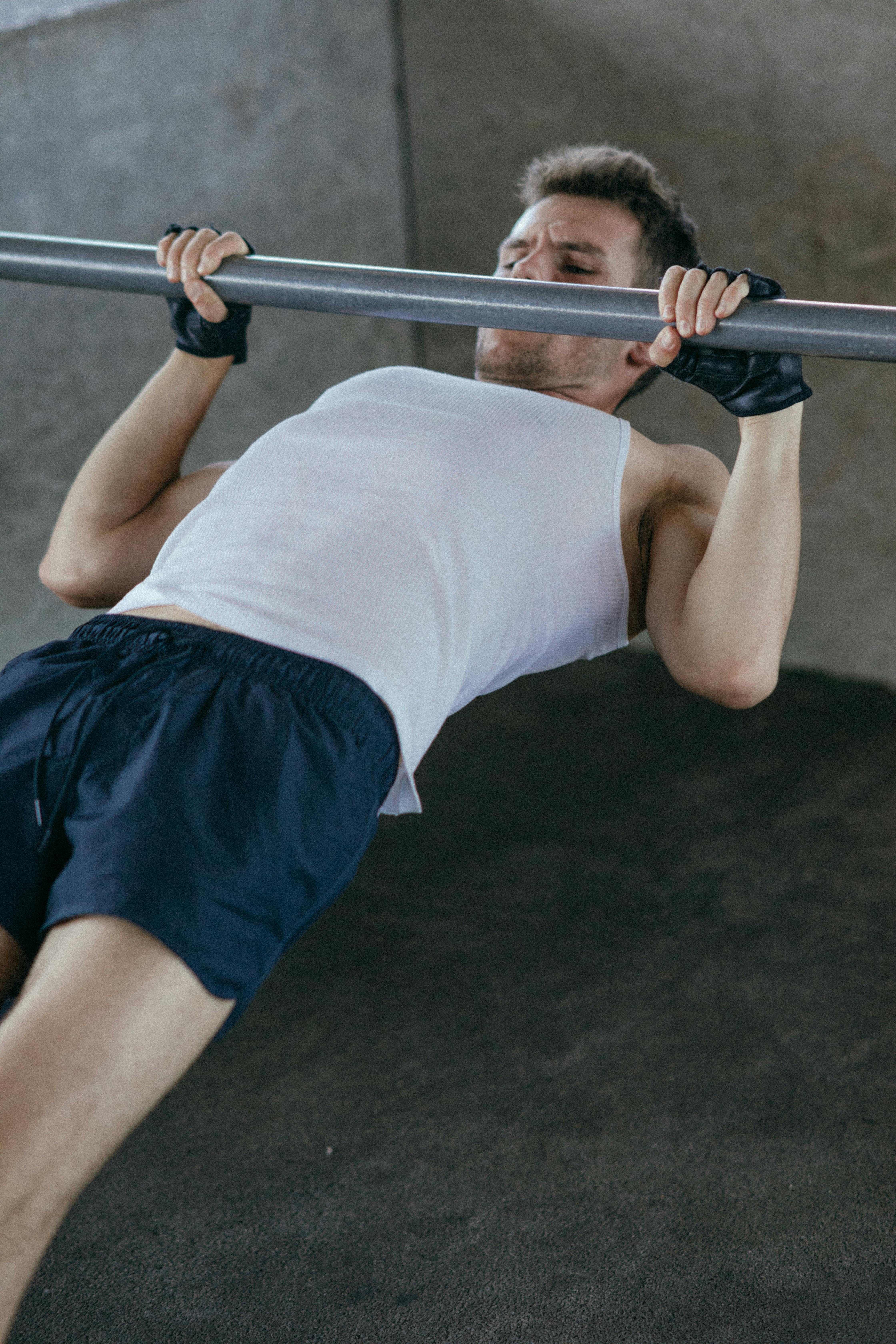
The Inverted Row is a bodyweight pulling exercise in which you hang beneath a bar and pull your chest toward it. This exercise is also referred to as a horizontal pulling movement and is highly effective for improving back strength and posture.

It primarily activates the Latissimus Dorsi (Lats), Rhomboids, and Middle Trapezius muscles. Additionally, the Rear Deltoids, Biceps, and Forearms assist in the movement. The core muscles, glutes, and lower back also engage to keep the body straight and stable.

The Inverted Row serves as an excellent alternative to pull-ups for beginners and is highly beneficial for developing upper-body pulling strength.

A bodyweight horizontal pull that activates the lats, rhomboids, rear delts, and core muscles with reduced spinal stress.

Sunday, August 23, 2026

7 Best Cardio Exercises in the Gym for Fitness & Weight Loss

Cardio Exercises in the Gym

7 Best Cardio Exercises in the Gym

We often view cardio exercises as distinct from gym workouts, whereas in reality, cardio is an integral part of gym training; the difference is simply that the focus shifts from bodybuilding, muscle building, or strength training to cardio. Here, we will provide detailed information about cardio exercises.


Cardio exercises See Alsoare an important part of a healthy and active lifestyle. They are exercises that increase the heart rate and make the heart and lungs work harder.

In a gym, there are many types of cardio exercises that people can choose according to their fitness level, goals, and personal preferences.

Regular cardio can improve stamina, support heart health, help manage body weight, and make everyday activities easier.

The best results usually come from choosing exercises that are enjoyable and doing them consistently.

1. Treadmill Walking or Running

Treadmill walking or running is a form of exercise performed on a machine called a treadmill. The treadmill has a moving belt that allows a person to walk or run while staying in one place. Walking on a treadmill is usually a low-impact activity that helps improve fitness, strengthen muscles, and support heart health. Running is more intense and can improve endurance, burn more calories calories burn check, and strengthen the legs. Treadmill exercise is convenient because speed and incline can be adjusted according to a person’s fitness level. It can be done at home or in a gym and is useful for maintaining overall physical health.


Treadmill Walking or Running

One of the most common cardio exercises in the gym is treadmill walking or running. A treadmill is suitable for beginners because the speed and incline can be adjusted easily. A person who is new to exercise can start with comfortable walking and gradually increase the speed.


More experienced people can use jogging, running, or incline walking how to reduce belly fat to make the workout harder. Incline walking is especially useful because it increases the effort without requiring very fast running. A treadmill workout can also include intervals, such as alternating between fast walking and slower walking.

2. Stationary Bicycle

Another popular cardio machine is the stationary bicycle. Cycling is a good choice for people who want an effective workout with less impact on the joints than running. The resistance can be increased as fitness improves.


Stationary Bicycle

Beginners can start with a steady pace for around 15 to 20 minutes and slowly increase the duration. Stationary bikes are also useful for interval training, where a person pedals quickly for a short period and then slows down for recovery.

3. Elliptical Trainer

The elliptical trainer is another excellent option. It provides a full-body movement involving both the arms and legs. Because the feet remain on the pedals, the exercise generally puts less impact on the joints compared with running.


Elliptical Trainer

An elliptical trainer is a popular cardio exercise machine that provides a low-impact full-body workout. It allows users to move their arms and legs in a smooth, continuous motion without putting too much stress on the joints. Regular use of an elliptical trainer can improve cardiovascular fitness, strengthen the legs and arms, burn calories, and increase endurance. It is suitable for beginners as well as experienced exercisers because the resistance and speed can be adjusted according to fitness levels. Elliptical workouts are also useful for warming up, improving stamina, and supporting weight management. Overall, the elliptical trainer offers a safe, comfortable, and effective way to stay active.


The resistance and incline can often be adjusted to make the workout more challenging. The elliptical can be particularly useful for people who want to improve endurance while avoiding repetitive high-impact movements.

4. Rowing Machine

The rowing machine provides a different type of cardio workout. Rowing involves the legs, back, arms, and core, so it can provide both cardiovascular and muscular benefits.

Rowing Machine

However, proper technique is important. Beginners should learn the correct rowing movement rather than immediately trying to row at maximum speed. A controlled pace with good form is more beneficial and can reduce the risk of discomfort or injury.

5. Stair Climbing

Another effective exercise is stair climbing. Stair machines or step machines increase the heart rate quickly and challenge the muscles of the legs and hips.

Stair climbing is a simple and effective cardio exercise that helps improve overall fitness and stamina. It involves repeatedly walking or running up and down stairs, making it a great workout for the legs, heart, and lungs. Regular stair climbing can strengthen the thighs, calves, and glutes while also helping burn calories and maintain a healthy weight. It can be done indoors or outdoors and requires little or no special equipment. Beginners can start slowly and gradually increase their pace and duration. Stair climbing is also a convenient way to add physical activity to a daily routine while improving endurance and cardiovascular health.


Stair Climbing

Even a short session can feel demanding. Beginners can start slowly and take breaks when necessary. As endurance improves, they can increase the time or resistance. Stair climbing is also useful for people who want to combine cardio with lower-body strengthening.

6. Jumping Rope

Jumping rope is a simple but intense cardio exercise that can be performed in many gyms. It improves coordination, balance, and cardiovascular endurance.

However, it can be demanding on the calves, ankles, and knees, especially for beginners. Starting with short periods, such as 30 seconds of jumping followed by a rest, can make it easier to build fitness gradually.

Jumping rope is a simple yet effective exercise. It involves performing a series of continuous, small jumps with the help of a rope. The rope is swung by hand, and the person jumps each time it passes beneath their feet. This exercise is beneficial for people of almost all ages, from children to adults.

Jumping rope is considered an excellent cardio workout. It raises the heart rate and helps improve the body's stamina and endurance. Regular jumping rope also burns calories, making it helpful for weight management. Additionally, it engages the muscles of the legs and calves, as well as the entire body to some extent. It can also improve balance, coordination, and agility.

Beginners should not jump rope too fast or for too long initially. It is best to start with a few minutes of gentle exercise and gradually increase the duration and speed. Wearing appropriate shoes and exercising on a flat surface is also important. With regular practice, jumping rope can become a fun and beneficial fitness activity.

7. Group Cardio Classes

Group cardio classes are a fun and energetic way to improve fitness while staying motivated. These classes usually include activities such as aerobics, Zumba, cycling, dance workouts, or high-intensity interval training. Exercising in a group creates a friendly and supportive environment where participants can encourage each other and enjoy the workout together. Regular cardio classes can improve heart health, increase stamina, burn calories, and help reduce stress. They are suitable for people with different fitness levels because instructors can provide easier or more challenging options. Most importantly, group cardio classes make exercise enjoyable, social, and easier to maintain as part of a healthy lifestyle.

Group cardio classes can also make exercise more interesting. Many gyms offer activities such as cycling classes, dance-based workouts, aerobic sessions, or circuit training.


Group Cardio Classes

These classes can provide motivation because people exercise together and follow an instructor. They may also help prevent boredom by introducing different movements and workout styles.

Creating a Cardio Routine

For a good cardio routine, consistency is more important than exercising extremely hard every day. A beginner might start with about 20 to 30 minutes of moderate cardio several times a week and gradually increase the duration as fitness improves.


Cardio Routine

It is also useful to combine cardio with strength training, flexibility work, and adequate rest. Warming up before exercise and cooling down afterward can make the workout more comfortable.

Cardio Routine: Cardio Routine exercises:

Conclusion

Gyms provide many cardio options, including treadmills, stationary bikes, elliptical trainers, rowing machines, stair climbers, jump ropes, and group classes. Each exercise has its own advantages, so there is no single best choice for everyone.

The most suitable exercise depends on a person's fitness level, goals, preferences, and physical comfort. By choosing enjoyable activities and following a regular routine, people can improve their stamina, support their overall health, and feel more energetic in daily life. The key is to start at a comfortable level, progress gradually, and make exercise a regular part of life.

Thursday, January 29, 2026

cardio exercise in gym

Cardio Exercise in the Gym

Cardio Exercise in the Gym

Cardio exercise is slightly different from regular exercises; we can even call it the baseline for other exercises. We can do cardio before or after other exercises, depending on the body's requirements.

Cardio exercise, short for cardiovascular exercise, refers to any physical activity that raises your heart rate and keeps it elevated for a sustained period of time. In the gym, cardio workouts are a vital part of a balanced fitness routine because they strengthen the heart and lungs, improve endurance, and support overall health.

One of the main benefits of cardio exercise is improved cardiovascular health. Regular cardio training makes the heart stronger and more efficient at pumping blood. It improves oxygen circulation, lowers resting heart rate, and reduces the risk of heart diseases such as high blood pressure and stroke.

Popular Cardio Exercises in the Gym

  • Treadmill: One of the most popular cardio exercises cardio exercises at gym, which people often start with as a warm-up when they arrive at the gym.Used for walking, jogging, or running with adjustable speed and incline.

  • Stationary Bike: Secondly, cardio is one of the best exercises.A low-impact workout that is easy on joints and knees.These are generally exercises suitable for people of all ages. They help burn calories, lower heart rate, and increase the strength of the thighs and calves.hey are ideal for home workouts, especially when outdoor cycling is not possible due to weather or safety reasons. Regular use of a stationary bike supports weight loss, stamina, and overall physical fitness.

  • Elliptical Trainer: Provides a full-body workout with minimal joint stress.An elliptical trainer is a popular fitness machine See Alsodesigned for full-body cardiovascular exercise. It allows users to move their legs in a smooth, oval motion while engaging the arms through moving handles.it help improve heart health, burn calories, and strengthen muscles of the legs, arms, and core. Most machines offer adjustable resistance and incline levels, along with digital displays to track time, distance, speed, and calories burned . How to check calories burn checkout

  • Rowing Machine: A rowing machine is an excellent cardio fitness equipment that provides a full-body workout. It targets major muscle groups including legs, back, arms, shoulders, and core while also strengthening the heart and lungs. Engages legs, arms, back, and core muscles together.

  • Jump Rope: A high-intensity exercise that improves agility and burns calories fast.Jump rope is a simple yet highly effective cardio exercise that improves overall fitness. It helps increase heart rate, burn calories, and boost endurance in a short amount of time.
Home workout cardio

Cardio and Weight Management

Cardio exercises are very effective for weight loss and fat burning. During cardio workouts, the body burns calories to produce energy. High-Intensity Interval Training (HIIT) is especially popular because it burns more calories in less time and boosts metabolism even after the workout ends.

Mental Health Benefits

Cardio exercise helps reduce stress, anxiety, and depression by releasing endorphins. It improves sleep quality, increases energy levels, and enhances overall mood. Many people use cardio workouts to clear their mind and stay mentally focused.

Cardio exercises—such as running, walking, cycling, swimming, jumping rope, and dancing—are not just for keeping the body fit; they are also highly beneficial for the brain and mental healthSee also. Regular cardio exercise improves mood, reduces stress, and boosts mental energy.

1. Reduces Stress and Anxiety Cardio exercise triggers the release of chemicals in the body known as endorphins, often referred to as "feel-good hormones." These hormones help alleviate stress, anxiety, and negative thoughts, promoting a sense of calm.


2. Improves Mood Engaging in 20–30 minutes of cardio daily can help reduce symptoms of depression and low mood. Exercise increases blood flow, delivering more oxygen and nutrients to the brain, which in turn improves mood.

3. Boosts Confidence and Self-Esteem Regular cardio helps you see improvements in your stamina, fitness, and physique, thereby boosting your self-confidence. It fosters a sense of mental strength and positivity.

4. Promotes Better Sleep Cardio exercise burns off excess energy and helps regulate the sleep cycle. Quality sleep reduces stress and allows the brain to recover more effectively.

5. Enhances Brain Function and Focus Cardio exercise increases blood circulation to the brain, which can improve memory, concentration, and learning ability. This is particularly beneficial for students and working professionals.


6. Helps Control Negative Thoughts During exercise, your focus shifts to movement and breathing, providing a temporary respite from overthinking and persistent negative thoughts.

Tips for Effective Cardio

Beginners should start with 15–20 minutes of moderate cardio and gradually increase intensity and duration. Fitness experts recommend at least 150 minutes of moderate or 75 minutes of intense cardio per week. Always warm up before and cool down after your workout.

Tuesday, July 21, 2026

15 Best Upper Back Exercises Gym for Muscle Growth

15 Best Upper and lower Back Exercises Gym for Muscle Growth

A strong upper back improves posture, enhances pulling strength, supports shoulder health, and creates a wider, more muscular physique. Add these exercises to your workout routine to target the trapezius, rhomboids, rear deltoids, and upper lats for balanced muscle growth.


1. Lat Pulldown

The lat pulldown is one of the key exercises for the back; it is considered an excellent choice for training the upper back. As the name suggests, this exercise targets the lats (latissimus dorsi) by pulling a bar downwards.

Lat Pulldown

The lat pulldown is one of the most effective upper back exercises for building width and strength. Sit with your thighs secured, grip the bar slightly wider than shoulder-width, and pull it toward your upper chest. Squeeze your shoulder blades together before slowly returning the bar. Focus on controlled movement

The Lat Pulldown primarily targets the Latissimus Dorsi (Lats), but the emphasis on specific areas of the lats can shift depending on the grip and technique used.
Which parts of the lats are activated during a Lat Pulldown?
1. Upper Lats (Outer Lats) – ⭐⭐⭐⭐⭐ Primary These experience the highest level of activation. A wide-grip lat pulldown places greater tension on the outer lats.
It helps in building a V-shaped back.

2. Middle Lats – ⭐⭐⭐⭐☆ Good activation is achieved when pulling the bar down to the upper chest. It improves both the thickness and width of the back.

3. Lower Lats – ⭐⭐⭐☆☆ The lower lats are engaged during a standard lat pulldown, though to a comparatively lesser extent. Close-grip or neutral-grip lat pulldowns and straight-arm pulldowns target the lower lats more effectively. Secondary Muscles

The lat pulldown involves not just the lats; the following muscles also assist in the movement: 1 Teres Major
2 Rhomboids
3 Middle & Lower Trapezius
4 Rear Deltoids
5 Biceps Brachii
6 Brachialis
7 Forearms (Grip)


2.Seated Cable Row

The Seated Cable Row is one of the most effective compound exercises for the upper and middle back. It is considered an excellent exercise for increasing back thickness.

The seated cable rowdevelops thickness across the upper and middle back. Sit upright, keep your chest lifted, and pull the handle toward your lower ribs. Avoid leaning backward excessively. Pause briefly while squeezing your shoulder blades, then return the weight under control. This exercise also improves posture and overall pulling strength.

Target Muscles (Primary)
1. Rhomboids They experience the highest level of activation. They work to squeeze the shoulder blades backward. They build thickness and strength in the upper back.
2. Middle Trapezius Helps bring the shoulder blades together (retraction). Develops better posture and upper back thickness.
3. Latissimus Dorsi (Middle & Lower Lats) The lats undergo contraction, especially during medium and close-grip rows. Improves back width and pulling strength.
4. Rear Deltoids Targets the rear portion of the shoulders. Aids in shoulder stability and balanced upper body development. Secondary Muscles


Seated Cable Row

Seated Cable Row

These muscles also assist in the movement: 1 Lower Trapezius
2 Teres Major
3 Biceps Brachii
4 Brachialis
5 Brachioradialis (Forearms)
6 Erector Spinae (Lower Back Stabilizer)
7 Core Muscles


3. Bent-Over Barbell Row

As the name suggests, the 'bent-over row' involves performing a rowing movement while bent over—using either dumbbells or a barbell—which is why it is called the bent-over row.

The Bent-Over Barbell Rowis one of the most powerful compound exercises for the upper and middle back. It trains multiple muscles in a single movement and helps increase back thickness, strength, and overall size.

 Best Upper Back Exercises Gym  Bent-Over Barbell Row

Bent-Over Barbell Row

Primary Target Muscles
1. Latissimus Dorsi (Middle & Lower Lats) The lats work to pull the elbows close to the body during the movement. They help make the back wider and thicker.
2. Rhomboids They squeeze the shoulder blades back and together. They improve upper back thickness and posture.
3. Middle Trapezius Retracts the scapula (shoulder blades). Develops a strong and dense upper back.
4. Rear Deltoids Strengthens the rear part of the shoulders. Enhances shoulder stability during pulling movements.
5. Teres Major Works with the lats to pull the arm toward the body. Contributes to back width and pulling strength. in short

Bent-over barbell rows target multiple upper back muscles while increasing overall strength. Bend at the hips with a straight back, hold the barbell with an overhand grip, and pull it toward your lower chest. Lower the weight slowly to maintain muscle tension. Keep your core engaged throughout the movement.


4. Face Pull

In a face pull, we pull a rope or cable towards our face—hence the name—and it is considered an exercise that involves highly controlled movement. achieving optimal muscle activation and effectively targeting the intended muscles depends on maintaining good posture. You should perform this exercise while keeping your body stationary and avoiding any extraneous movement.

The Face Pull is one of the most effective isolation exercises for upper back and shoulder health. This exercise improves posture, stabilizes shoulder joints, and strengthens the upper back muscles along with the rear delts.

Face Pull

Primary Target Muscles
1. Rear Deltoids (Posterior Delts) The rear deltoids are the primary target of the face pull. They make the back of the shoulders strong and well-defined.
They aid in balanced shoulder development.
2. Rhomboids They squeeze the shoulder blades backward. They improve upper back thickness and posture.
3. Middle Trapezius It retracts the shoulder blades. It makes the upper back stable and stronger.
4. Lower Trapezius It keeps the scapula downward and stable. It makes shoulder movement smooth and safe.
Secondary Muscles These muscles assist in the movement: -- Rotator Cuff Muscles (Infraspinatus & Teres Minor)
-- Upper Trapezius
-- Rear Shoulder Stabilizers
-- Biceps
-- Forearms Core Muscles
In short

Face pulls strengthen the rear shoulders, traps, and rhomboids while improving shoulder stability. Attach a rope to a cable machine at face level and pull it toward your face with elbows flared. Squeeze your upper back at the end of each repetition. This exercise is excellent for correcting poor posture.


5. Chest-Supported Row


Chest-Supported Row – Muscles Worked & Exercise Explanation The chest-supported row See Alsois an effective upper-back exercise that minimizes stress on the lower back thanks to the chest support. This movement isolates the upper and middle back muscles, allowing for better muscle activation and the maintenance of controlled form.

Primary Target Muscles
1. Rhomboids The rhomboids are the primary target of the chest-supported row. They retract the shoulder blades, increasing upper-back thickness and strength.
2. Middle Trapezius The middle traps retract the shoulder blades. This exercise helps build a dense, muscular upper back.
3. Latissimus Dorsi (Middle Lats) The lats pull the elbows toward the body. This improves back width and overall pulling strength.
4. Rear Deltoids The rear delts assist with shoulder extension during the movement. They contribute to shoulder balance and stability.
5. Teres Major Working alongside the lats, the teres major pulls the arm toward the body. It enhances overall upper-back strength.
Secondary Muscles

Best Upper Back Exercises Gym Chest-Supported Row
Chest-Supported Row

These muscles support the movement: 1 Lower Trapezius
2 Biceps Brachii
3 Brachialis
4 Brachioradialis (Forearms)
5 Rotator Cuff Muscles
6 Core Muscles (Stabilization)
Note: Since the chest is supported against the bench, lower back (erector spinae) involvement is significantly lower compared to the bent-over row. Send feedback

The chest-supported row minimizes lower back strain while isolating the upper back muscles. Lie face down on an incline bench and row dumbbells or machine handles toward your body. Pause at the top to contract your shoulder blades before lowering slowly. It is ideal for beginners and experienced lifters alike.


6. T-Bar Row


T-Bar Row – Muscles Worked & Exercise Explanation The T-Bar Row is a powerful compound back exercise that is highly effective for increasing the thickness, strength, and muscle mass of the upper and middle back. Along with the lats, this exercise intensely targets the rhomboids, trapezius, and rear deltoids, giving the back a dense and muscular appearance. Primary Target Muscles
1. Latissimus Dorsi (Lats) The lats are the primary target of the T-Bar Row. They increase back width and pulling strength. The lats do the bulk of the work in pulling the elbows toward the body.
2. Rhomboids Rhomboids squeeze the shoulder blades back and together. They make the upper back thick and strong.
3. Middle Trapezius The middle traps are responsible for shoulder blade retraction. They give the upper back a dense and powerful appearance.
4. Rear Deltoids Rear delts assist in the pulling movement. They aid in shoulder stability and balanced shoulder development.
5. Teres Major The teres major works with the lats to strengthen the pulling movement. It contributes to increasing overall back thickness.


T-Bar Row

Secondary Muscles These muscles support the movement: 1 Lower Trapezius
2 Erector Spinae (Lower Back)
3 Biceps Brachii
4 Brachialis
5 Brachioradialis (Forearms)
6 Core Muscles
7 Glutes
8 Hamstrings

Muscle activation during the movement Starting Position Stand in a hip-hinge position.
Place your chest on the support pad (if using a chest-supported machine) or keep your back neutral. Keep your arms fully extended. Pulling Phase Pull the handle toward your lower chest or upper abdomen while keeping your elbows close to your body. The lats generate the pulling force.
The rhomboids and middle traps squeeze the shoulder blades together. Complete the movement for the rear delts and biceps. End Position Bring the handle close to your body and squeeze for one second. Fully contract your shoulder blades.
Lower the weight slowly while maintaining tension on the muscles.

The T-bar row is a powerful compound exercise that builds upper back thickness and strength. Keep your chest supported or maintain a strong hip hinge while pulling the handle toward your chest. Avoid jerking the weight. Slow, controlled repetitions maximize muscle activation and reduce the risk of injury.


7. Reverse Pec Deck Fly


Reverse Pec Deck Fly – Muscles Worked & Exercise Explanation The Reverse Pec Deck Fly See Alsois an excellent isolation exercise that targets the rear deltoids (posterior shoulders) and upper back muscles. This exercise improves shoulder stability, enhances posture, and gives the upper back a balanced, defined, and muscular appearance.

Primary Target Muscles
1. Rear Deltoids (Posterior Delts The rear deltoids are the primary target of the Reverse Pec Deck Fly. They strengthen and define the back of the shoulders. They are crucial for balanced shoulder development.

2. Rhomboids The rhomboids squeeze the shoulder blades backward and together. They improve upper back thickness and posture.

3. Middle Trapezius The middle trapezius assists in the retraction of the shoulder blades. It adds density and stability to the upper back.

4. Lower Trapezius The lower traps stabilize the scapula. They ensure smooth and controlled shoulder movement.


Reverse Pec Deck Fly

Secondary Muscles These muscles support the movement: 1 Teres Minor
2 Infraspinatus (Rotator Cuff)
3 Teres Major
4 Upper Trapezius
5 Forearms (Grip)
6 Core Muscles (Stabilization)

Note: The lats (Latissimus Dorsi) play a minimal role in the Reverse Pec Deck Fly. The primary focus of this exercise is on the rear delts and upper back muscles.

This machine exercise effectively isolates the rear deltoids and upper back muscles. Sit facing the machine, grab the handles, and move your arms outward in a wide arc. Squeeze your shoulder blades together before returning to the starting position. Use moderate weight for better control and muscle engagement.


8. Single-Arm Dumbbell Row

The single-arm dumbbell row is a highly effective unilateral exercise that trains one side of the body at a time. This exercise provides deep contraction to the lats, rhomboids, and trapezius muscles. Additionally, it helps correct strength imbalances between the left and right sides.

Primary Target Muscles
1. Latissimus Dorsi (Lats) The lats are the primary target of the single-arm dumbbell row. They increase back width and pulling strength. Pulling the elbow towards the hip effectively activates the lower and middle lats.

2. Rhomboids The rhomboids squeeze the shoulder blades back and together. They improve upper back thickness and posture.
3. Middle Trapezius The middle traps retract the scapula. They give the upper back a dense, muscular appearance.
4. Teres Major Working alongside the lats, the teres major pulls the arm towards the body. It contributes to pulling strength and back development.
5. Rear Deltoids The rear delts assist with shoulder extension during the movement.


Single-Arm Dumbbell Row

The single-arm dumbbell row improves muscle balance by working each side independently. Place one knee and hand on a bench, keep your back flat, and pull the dumbbell toward your hip. Lower it slowly while maintaining control. Concentrate on squeezing your upper back rather than using your arm strength.


9. Pull-Ups

Pull-ups are among the most effective bodyweight compound exercises. This exercise is highly popular for increasing back width, upper body strength, and grip power. While pull-ups primarily target the lats, various muscles in the upper back, shoulders, and arms also work together during the movement.


Pull-Ups

Pull-ups are a challenging bodyweight exercise that builds upper back strength, grip, and endurance. Hang from a pull-up bar with an overhand grip and pull your chest toward the bar. Lower yourself slowly until your arms are fully extended. Beginners can use an assisted pull-up machine or resistance bands.


10. Machine High Row

The Machine High Row is a compound pulling exercise that effectively targets the upper lats, rhomboids, trapezius, and rear deltoids. The pulling angle runs from high to low, placing greater tension on the upper lats and upper back. The machine's fixed path of motion makes it easy for both beginners and advanced lifters to maintain proper form.


Machine High Row Primary Target Muscles
1. Latissimus Dorsi (Upper & Outer Lats) The primary targets of the Machine High Row are the upper and outer lats. They help give the back a wider look and a V-taper appearance. Pulling the elbows down and towards the body maximizes lat contraction.
2. Rhomboids The rhomboids squeeze the shoulder blades back and together. They improve upper back thickness and posture.
The middle trapezius retracts the scapula. It builds a dense, strong, and muscular upper back. 4. Teres Major The teres major works alongside the lats to assist in the pulling movement. It supports back width and strength.
5. Rear Deltoids (Posterior Delts) The rear delts assist in shoulder extension and the pulling movement. They improve balanced shoulder development and stability.

The Machine High Row is an excellent compound back exercise that targets the upper lats, upper back, and rear shoulders. Thanks to the machine's fixed movement path, both beginners and advanced lifters can effectively train these muscles while maintaining proper form. This exercise improves both the width and thickness of the back.

The machine high row targets the upper lats, rhomboids, and rear shoulders with excellent stability. Adjust the seat correctly and pull the handles toward your upper chest while keeping your elbows slightly wide. Pause briefly before returning the weight slowly. This movement is easy to learn and highly effective.


11. Wide-Grip Cable Row


Wide-Grip Cable Row – Muscles Worked & Exercise Explanation The wide-grip cable row is an excellent compound back exercise that improves upper back thickness, posture, and shoulder stability. Due to the wide grip, this exercise places greater emphasis on the rhomboids, middle trapezius, and rear deltoids compared to the standard cable row. It is a highly effective exercise for building a wider and stronger upper back.

Wide-Grip Cable Row


Using a wide attachment shifts more emphasis onto the upper back and rear shoulders. Sit tall, pull the handle toward your upper abdomen, and keep your elbows moving outward. Squeeze your shoulder blades at the end of each repetition before slowly extending your arms. Avoid rounding your back.


12.Dumbell shrug

.Dumbell shrug

Dumbbell Shrugs – Muscles Worked & Exercise Explanation Dumbbell shrugs are an isolation exercise that primarily targets the upper trapezius (upper traps). This exercise increases neck and upper back strength, improves shoulder stability, and helps build thick, powerful, and well-defined traps.


Dumbbell shrugs isolate the upper trapezius muscles, helping create a stronger and more defined neck and upper back. Hold a dumbbell in each hand, keep your arms straight, and raise your shoulders as high as possible. Pause briefly before lowering the weights under control without rolling your shoulders.


13. Rack Pull

The rack pull is a powerful compound exercise that serves as a partial-range variation of the deadlift. It is primarily used to develop the upper back, traps, lower back, and grip strength. Due to the ability to handle heavy weights, it is highly effective for increasing muscle size and overall pulling strength.


See Also

Rack pulls strengthen the traps, upper back, and grip while allowing heavier loads than conventional deadlifts. Start with the bar positioned just below knee height, maintain a neutral spine, and lift by driving your hips forward. Lower the bar carefully to protect your back and maximize muscle development.


14. Inverted Row


The Inverted Row is a bodyweight pulling exercise that primarily strengthens the upper back, lats, rhomboids, trapezius, rear deltoids, and biceps. To perform this exercise, lie on your back beneath a bar (such as a barbell, Smith machine, or TRX straps), grasp the bar with a shoulder-width grip, and pull your chest toward the bar while keeping your body straight from head to heel. Squeeze your shoulder blades together at the top of the movement, then slowly lower yourself back down. This exercise is considered excellent for improving posture, increasing grip strength, and preparing for pull-ups. Everyone, from beginners to advanced athletes, can incorporate it into their back training routine.


1. Latissimus Dorsi (Lats) The lats perform the primary pulling action during the Inverted Row. They help increase back width and pulling strength. The lats activate to pull the body toward the bar.
2. Rhomboids The rhomboids squeeze the shoulder blades by pulling them backward. They improve upper back thickness and posture.
3. Middle Trapezius The middle traps play a crucial role in scapular retraction. They stabilize and strengthen the upper back.
4. Rear Deltoids (Posterior Delts) The rear delts assist in the shoulder extension movement. They improve balanced shoulder development and stability.
5. Teres Major Working alongside the lats, the teres major pulls the arm toward the body. It enhances back strength and muscle activation.
Best Upper Back Exercises Gym  Inverted Row
Inverted Row

Secondary Muscles These muscles also play a role in the movement: 1 Biceps Brachii
2 Brachialis
3 Brachioradialis (Forearms)
4 Lower Trapezius
5 Erector Spinae
6 Core Muscles (Abs & Obliques)
7 Glutes (Body Stability)

The inverted row is an excellent bodyweight exercise for improving upper back strength and posture. Hold a fixed bar, keep your body straight, and pull your chest toward the bar. Lower yourself slowly while maintaining full-body tension. It is suitable for beginners and advanced athletes by adjusting body angle.


Inverted Row Exercise Guide

15. Cable Straight-Arm Pulldown

Cable Straight-Arm Pulldown – Muscles Worked & Exercise Explanation The Cable Straight-ArPulldown is an isolation exercise that primarily targets the Latissimus Dorsi (Lats). It is highly effective for increasing back width, improving the mind-muscle connection, and directly activating the lats. Since there is minimal involvement of the biceps, the focus remains squarely on the lats.

Primary Target Muscles
1. Latissimus Dorsi (Lats) ⭐⭐⭐⭐⭐ The lats are the primary target of the Cable Straight-Arm Pulldown. They help give the back a wider, V-shaped appearance. The lats are responsible for pulling the arms downward and backward.
2. Teres Major ⭐⭐⭐⭐☆ The teres major works alongside the lats during the shoulder extension movement. It supports back width and upper back development.
3. Lower & Middle Trapezius ⭐⭐⭐⭐☆ The trapezius muscles help stabilize the shoulder blades. They play a role in maintaining proper posture and controlled movement.

Best Upper Back Exercises Gym Cable Straight-Arm Pulldown

Cable Straight-Arm Pulldown

Secondary Muscles These muscles support the movement: 1 Rear Deltoids
2 Rhomboids
3 Serratus Anterior
4 Core Muscles
5 Forearms (Grip)

Note: Bicep activation is minimal in this exercise because there is no movement at the elbow joint. This makes it an excellent exercise for isolating the lats.

The straight-arm cable pulldown targets the upper lats while improving shoulder control and mind-muscle connection. Stand facing a cable machine, keep your arms nearly straight, and pull the bar toward your thighs. Return slowly while maintaining tension. This exercise works well as a finishing movement after rows.

Sunday, August 30, 2026

back exercises at gym

Back Gym Exercise: Best Exercises for a Stronger and Bigger Back

A strong and well-developed back is an important part of a balanced fitness routine. Whether your goal is to build muscle, increase strength, improve posture, or develop a wider V-shaped physique, choosing the right back gym exercise can make a big difference.

Back exercises are physical exercises designed to strengthen and maintain the health of the back muscles. The back is a crucial part of the body, as it provides support and helps maintain proper posture. Weak back muscles can lead to back pain, poor posture, and difficulties in performing daily activities.

Performing back exercises can strengthen back muscles, increase body flexibility, and improve posture. These exercises are particularly beneficial for individuals who spend long periods sitting, such as students and office workers. Regular exercise keeps the body active and enhances muscle strength.

There are several simple exercises for the back. In the Cat-Cow Stretch, one gets onto their hands and knees and slowly moves the back up and down; this helps improve spinal flexibility.

Back exercises can also be performed at the gym, such as Lat Pulldowns, Seated Rows, and Dumbbell Rows. It is essential to perform these exercises using the correct technique. Beginners should always start with lighter weights and gradually increase the intensity.


One should warm up before performing back exercises. It is important to maintain control over the body during the workout and avoid poor posture. If sharp pain occurs while exercising, the activity should be stopped immediately.

In summary, back exercises are a beneficial physical activity that helps strengthen back muscles, improve posture, and keep the body active. Through regular and safe exercise, we can maintain a healthy back.

The back contains several important muscles, including the latissimus dorsi, trapezius, rhomboids, and erector spinae. Training these muscles with proper technique can help you develop a stronger and more powerful upper body.

In this guide, we will cover some of the best back gym exercises and explain how you can include them in your workout routine.

Why Are Back Exercises Important?

Back training is important for more than just appearance. Strong back muscles help support your spine, improve posture, and make everyday movements easier. A properly trained back can also improve performance in other exercises such as squats, deadlifts, and overhead presses.

Regular back workouts can strengthen the muscles responsible for pulling and stabilizing your shoulders. Proper form and controlled movement are essential, especially when using heavier weights.

1. Lat Pulldown

The lat pulldown is one of the most popular back gym exercises for developing the latissimus dorsi muscle, commonly called the lats. It is particularly useful for beginners because the machine provides stability while allowing you to learn the pulling movement.


Lat Pulldown

Sit comfortably on the machine, grip the bar slightly wider than shoulder width, and pull it toward your upper chest. Keep your chest lifted and avoid using excessive momentum. Slowly return the bar to the starting position.

If you feel the effort more in your biceps than in your lats while doing lat pulldowns, reduce the weight and focus on driving your elbows towards your hips. For beginners, the goal shouldn't just be to increase the weight; it is better to first consistently perform 8–12 controlled reps.

3 Sets × 8–12 Reps

2. Pull-Ups

Pull-ups See Also Pull-Ups Pull-Ups are a bodyweight strength exercise that primarily target the latissimus dorsi (lats), while also working the biceps, rhomboids, trapezius, rear shoulders, and core. They are excellent for developing upper-body pulling strength and improving back muscle definition.


Pull-Ups

To perform a pull-up, grip a pull-up bar with your hands slightly wider than shoulder-width apart and your palms facing away from you. Hang with your arms fully extended and engage your core. Pull your body upward by driving your elbows down and back. Continue until your chin passes above the bar, while keeping your body controlled. Slowly lower yourself until your arms are fully extended again.

Focus on using your back muscles rather than swinging your body or relying only on your arms. Avoid excessive kicking, momentum, or incomplete repetitions. Keep your core tight throughout the movement.

Pull-Ups can improve back strength, grip strength, arm strength, body control, and overall upper-body performance. Beginners who cannot perform a full pull-up can start with assisted pull-ups, resistance bands, or controlled negative repetitions. A common approach is 3–4 sets of 5–12 repetitions, depending on your fitness level. As you become stronger, you can increase repetitions or add weight for additional resistance.

3 Sets × 6–10 Reps

3. Barbell Row

Barbell Row See Also The Barbell Row is a compound strength exercise that primarily targets the latissimus dorsi, rhomboids, trapezius, and rear shoulders, while also engaging the biceps and core. It is excellent for building back strength, muscle thickness, and pulling power.

To perform it, stand with your feet about hip-width apart and hold a barbell with an overhand grip. Bend your knees slightly and hinge forward at your hips while keeping your back straight and core tight. Let the bar hang in front of you. Pull the bar toward your lower chest or upper abdomen by driving your elbows backward. Squeeze your back muscles at the top, then slowly lower the bar to the starting position.

Avoid rounding your back, using excessive momentum, or lifting a weight that you cannot control. Proper form is more important than heavy weight.
The Barbell Row can improve upper-body strength, posture, grip strength, and back development. Beginners can perform 3–4 sets of 8–12 repetitions with a manageable weight.


Barbell Row

Stand with your feet about shoulder-width apart and hold the barbell with an appropriate grip. Hinge forward while keeping your back in a neutral position. Pull the bar toward your lower chest or upper abdomen and then lower it slowly.

Beginners should start with a manageable weight and focus on learning correct technique.

3 Sets × 8–12 Reps

4. Seated Cable Row

The seated cable row is another effective back gym exercise for developing the middle and upper back. It provides resistance throughout much of the movement.

he Seated Cable Row is a strength-training exercise that mainly targets the upper and middle back, especially the latissimus dorsi, rhomboids, and trapezius muscles. It also works the biceps and rear shoulders as secondary muscles. To perform the exercise, sit on the rowing machine with your feet firmly placed on the footrests. Keep your knees slightly bent and your back straight. Hold the cable handle with both hands and extend your arms without rounding your back. Start by pulling your shoulder blades slightly backward. Then, pull the handle toward your lower chest or upper abdomen, keeping your elbows close to your body. Squeeze your back muscles at the end of the movement. Slowly extend your arms back to the starting position while maintaining control. Proper technique is important. Avoid using momentum, leaning excessively backward, or rounding your lower back. Keep your chest lifted and perform the movement smoothly.


Seated Cable Row

Sit with your feet supported and your chest upright. Pull the handle toward your torso while squeezing your shoulder blades together. Return the handle slowly and avoid rounding your back.

3 Sets × 10–12 Reps

5. One-Arm Dumbbell Row

he One-Arm Dumbbell Row is a strength-training exercise that primarily targets the latissimus dorsi (lats), while also working the rhomboids, trapezius, rear shoulders, and biceps. It is an effective exercise for building back strength, improving muscle balance, and developing upper-body pulling power.

To perform the exercise, place one hand and the same-side knee on a bench for support. Keep your other foot firmly on the floor and hold a dumbbell in your free hand. Maintain a neutral, straight back and keep your core engaged. Let the dumbbell hang below your shoulder. Pull the dumbbell upward toward your hip or lower ribs by driving your elbow backward. Squeeze your back muscles at the top of the movement, then slowly lower the dumbbell to the starting position.

Avoid twisting your torso, shrugging your shoulder, or using momentum to lift the weight. The movement should be controlled throughout the entire repetition. The One-Arm Dumbbell Row can help improve back thickness, posture, grip strength, and muscular symmetry. Beginners should start with a manageable weight and focus on proper technique. A common approach is 3–4 sets of 8–12 repetitions per arm.


One-Arm Dumbbell Row

Place one hand and knee on a bench for support while holding a dumbbell in the opposite hand. Pull the dumbbell toward your hip while keeping your torso stable. Lower the weight slowly and repeat.

3 Sets × 8–12 Reps Per Side

6. Deadlift

The Deadlift is a fundamental strength-training exercise that works several major muscle groups, including the hamstrings hamstring muscle, glutes, lower back, spinal erectors, trapezius, and core. It is one of the most effective exercises for developing overall strength and improving functional lifting ability.

To perform a deadlift, stand with your feet about hip-width apart and place a barbell in front of you. Bend your hips and knees while keeping your back neutral, then grip the bar slightly outside your legs. Brace your core and keep your chest lifted. Push through your feet and drive your hips forward while lifting the bar close to your body. Stand tall at the top without leaning backward. Lower the bar by pushing your hips back and bending your knees while maintaining a controlled, neutral spine.

Proper technique is essential because poor form can place excessive stress on the lower back. Avoid rounding your spine, jerking the bar, or letting it move far away from your body.
Deadlifts help improve full-body strength, posture, grip strength, power, and muscle development. Beginners should learn the movement with light weight before gradually increasing resistance. A common training range is 3–4 sets of 5–8 repetitions.

Barbell Stiff Leg Deadlift – Exercise Guide

Deadlift

Technique is extremely important. Keep the weight close to your body, maintain a neutral spine, and lift with controlled movement. Beginners should learn the technique with a qualified fitness professional before progressing to heavier loads.

3 Sets × 5–8 Reps

Sample Back Workout Routine

  • Lat Pulldown — 3 × 10–12
  • Seated Cable Row — 3 × 10–12
  • One-Arm Dumbbell Row — 3 × 8–12 per side
  • Pull-Ups or Assisted Pull-Ups — 3 × 6–10
  • Face Pulls — 2–3 × 12–15

Tips for Better Back Muscle Growth

Consistency is one of the most important factors in building your back. Focus on controlled repetitions instead of simply moving heavy weights. Keep your core stable and avoid excessive swinging or momentum.

Progressive overload can also help. Over time, you can gradually increase the weight, repetitions, or quality of your training while maintaining proper technique.

Fitness Tip: Adequate protein, nutritious food, hydration, quality sleep, and recovery are also important parts of a successful muscle-building program.

Common Back Workout Mistakes

  • Using too much weight and sacrificing technique.
  • Using the arms instead of properly engaging the back.
  • Rushing through repetitions.
  • Skipping warm-up and preparation.
Important: Stop an exercise if you experience sharp or unusual pain. Use appropriate weights and focus on safe, controlled technique.

What is the best back gym exercise?

There is no single best exercise for everyone. Lat pulldowns, pull-ups, rows, and deadlifts can all be useful depending on your goals and experience level.

How many back exercises should I do?

A balanced workout can include around 3–5 exercises covering different back movements. Beginners can start with fewer exercises and gradually increase training volume.

Can beginners do back exercises?

Yes. Beginners can perform exercises such as lat pulldowns, cable rows, assisted pull-ups, and light dumbbell rows while learning proper form.

How can I build a wider back?

Exercises that train the latissimus dorsi, such as pull-ups and lat pulldowns, can help develop the muscles that contribute to a wider back. Consistent resistance training and proper nutrition are also important.

Conclusion

The best back gym exercise routine combines different movements that target the lats, upper back, middle back, and supporting muscles. Exercises such as lat pulldowns, pull-ups, barbell rows, cable rows, dumbbell rows, and deadlifts can all contribute to a stronger and more developed back.

Start with manageable weights, focus on proper technique, and gradually progress as your strength improves. With consistent training and adequate recovery, a well-planned back workout can become an important part of your overall fitness routine.

Fitness

Fitness Hub

Fitness Hub FitnessHub ☰ ...