Search the content

Showing posts sorted by relevance for query thigs. Sort by date Show all posts

Sunday, June 1, 2025

exercise to reduce thigh fat

exercise to reduce thigh fat

Best Exercises to Reduce Thigh Fat Naturally and Effectively


Reducing fat from a specific area of the body—such as the thighs—is a common fitness goal, for man and women. While spot reduction (losing fat from just one part of the body) is largely a myth, combining targeted muscle-toning exercises with full-body fat-loss strategies can effectively slim down your thighs over time. Thigs is very important part of our body.It mantain all he upper body weight loads to balance.This article focuses on the most effective exercises to reduce thigh fat, as well as helpful tips for getting visible results faster.

exercise to reduce thigh fat

-- Understanding Thigh Fat

Thigh fat accumulates for various reasons including genetics, hormonal changes, sedentary lifestyle, and poor diet. For many, the body tends to store fat in the lower region—, thighs, and buttocks. This makes reducing thigh fat more challenging but not impossible.

-- How to Reduce Thigh Fat Effectively
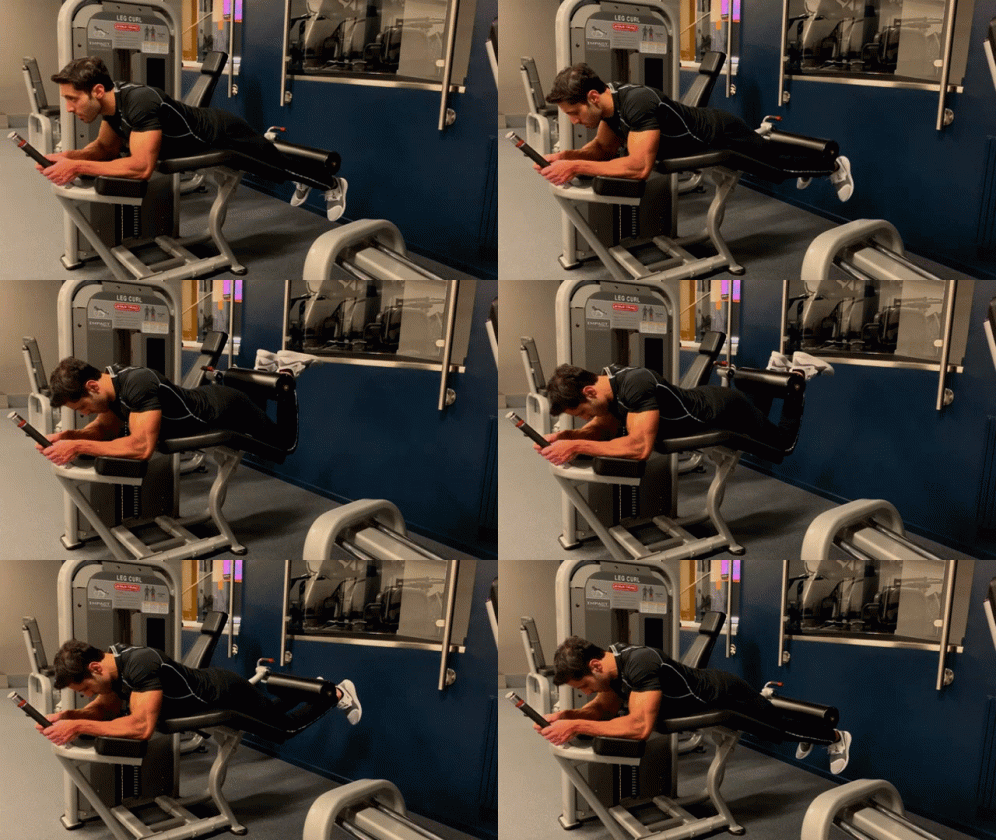
To reduce thigh fat, you need a combination of: Cardiovascular exercise – to burn calories and reduce overall body fat.you have to burn your calories for daily thigs basis exercises

Strength training – to tone thigh muscles. Healthy diet – to create a calorie deficit. Consistency – results don’t happen overnight.It takes a lot of time but not too.

Let’s dive into the exercises that are proven to target thigh fat and tone the muscles.

--Top 10 Exercises to Reduce Thigh Fat 1. Squats::- One of mlost effectly exercise for reduce thigs fat. most bof the loads shifted to thigs muscles like glutes and hamstrings. Why they work: Squats engage your quadriceps, hamstrings, and glutes major muscles in your lower body. How to do: Stand with feet shoulder-width apart. Lower your body like you’re sitting in a chair. Keep your chest up and knees behind toes. Return to standing. Do 3 sets of 15 reps.

2. Lunges Why they work: Lunges target both thighs individually, promoting muscle balance and fat burn. How to do: Step forward with one leg. Lower your body until both knees form 90-degree angles. Push back to starting position and repeat with the other leg. Do 3 sets of 10 reps per leg. 3. Jump Squats Why they work: This high-intensity move increases heart rate while toning thigh muscles. How to do: Perform a regular squat. As you rise, jump explosively. Land softly and go into the next squat. Do 3 sets of 12 reps.

4. Inner Thigh Lifts::-
Why they work: Focuses on the adductors—muscles on the inner thighs. How to do: Lie on your side with your top leg crossed over the bottom. Lift the bottom leg upward and slowly lower it. Do 3 sets of 15 reps per leg. 5. Step-Ups Why they work: A great functional movement that targets the front and back of the thighs. How to do: Use a sturdy bench or box. Step up with one leg and bring the other up. Step down and repeat. Do 3 sets of 10 reps per leg.

6. Wall Sits:: Why they work: Great for endurance and targeting thigh muscles.best exercise for laod and balance and its also target thigs muscles. How to do: Lean your back against a wall. Slide down until your thighs are parallel to the floor. Hold for 30–60 seconds. Repeat 3 times.

7. Burpees::- one of best exercise to do .targets the thigs muscles. Why they work: Full-body workout that burns calories and tones thighs. How to do: Squat down, jump your legs back into a plank, do a push-up (optional), jump feet back in, and leap up. Do 3 sets of 10 reps.

8. Side Lunges::- Lunges is most effective exercise for tarin our thighs and glutes and hamstring ,it also targets the thigs muscles. Why they work: Target the inner and outer thighs. How to do: Step to the side and bend one knee while keeping the other leg straight. Push back to the center and repeat on the other side. Do 3 sets of 10 reps per side.

9. Leg Circles::- Why they work: A Pilates move that tones inner thighs and core. How to do: Lie on your back with one leg lifted straight up. Make small circles with your leg. Switch legs. Do 2 sets of 10 circles per leg.

10. Running or Brisk Walking::- Why they work: Cardio is key for fat loss. Running or walking helps burn calories and improve leg strength.

Aim for 30–45 minutes, 4–5 days per week. -- Bonus Tips to Reduce Thigh Fat Faster Eat Clean: Focus on lean proteins, whole grains, vegetables, and healthy fats. Avoid sugary drinks and junk food. Stay Hydrated: Drinking water boosts metabolism and helps flush out toxins. Track Progress: Use a measuring tape or progress photos instead of just the scale. Stay Consistent: Results take time—stick to your routine at least 4–6 weeks.

Important Note You can't choose where your body loses fat first. However, by building muscle in your thighs and combining it with fat-burning cardio and a clean diet, you will notice overall slimming, including in your thighs.

Final Thoughts:- Reducing thigh fat requires a balanced approach: strength exercises to tone, cardio to burn calories, and a clean diet to support fat loss. These ten exercises, when done consistently with the right nutrition and mindset, can significantly improve the tone and appearance of your thighs over time.

Remember, patience and consistency are key. No shortcut replaces discipline and dedication. Begin today, and within weeks, you’ll start to see and feel the difference in your thighs and overall fitness.

Wednesday, June 18, 2025

dumbbell lunges

Dumbbell Lunges:

dumbbell lunges

Dumbbell lunges are one of the most effective exercises for building strength , enhancing balance, and improving overall coordination. Whether you’re a beginner aiming to tone your legs or an advanced athlete looking to sculpt powerful glutes and thighs, dumbbell lunges can be a key part of your fitness regimen. In this guide, we’ll explore what dumbbell lunges are, how to perform them correctly, their benefits, variations, safety tips, and how to incorporate them into your workout routine.

Dumbbell lunges are one of the most effective exercises for building strength of thigs and lowerbody, enhancing balance, and improving overall coordination. Whether you’re a beginner aiming to tone your legs or an advanced athlete looking to sculpt powerful glutes and thighs, dumbbell lunges can be a key part of your fitness regimen. In this exercises majority of load are shifyted to the hemstring and glute portion.In this guide, we’ll explore what dumbbell lunges are, how to perform them correctly, their benefits, variations, safety tips, and how to incorporate them into your workout routine.

What Are Dumbbell Lunges?


Dumbbell lunges are a compound, unilateral exercise that targets multiple muscle groups, primarily in the lower body. In this exercise, you hold a dumbbell in each hand and step forward, backward, or to the side while lowering your body into a lunge position. This movement challenges your legs, and core while also requiring balance and stability.

Muscles Targeted Dumbbell lunges work several major muscle groups: Quadriceps (front thighs): These muscles work hard during the lowering and lifting phases. Glutes (buttocks): Activated as you push back to the starting position. Hamstrings (back thighs): Help stabilize and extend the hip.

Calves: Help with balance and control. Core muscles: Stabilize the torso during movement. Additionally, your grip and forearms get some activation from holding the dumbbells.

Best dumbbell to purchase

How to Perform Dumbbell Lunges 1. Setup: Stand upright with a dumbbell in each hand. Keep your arms straight by your sides, shoulders relaxed. Stand tall with feet core engaged.

2. Execution (Forward Dumbbell Lunge): Step forward with your right foot about 2-3 feet. Lower your body until your right thigh is parallel to the ground and your left knee almost touches the floor.

Ensure your front knee is directly above your ankle (not pushed too far forward). Push through your right heel to return to the starting position.

Repeat on the other side. 3. Reps and Sets: Beginners: 2–3 sets of 8–10 reps per leg. Intermediate to advanced: 3–4 sets of 10–15 reps per leg.

Common Mistakes to Avoid Knee Going Too Far Forward: This can place undue stress on the knee joint. Always keep your front knee aligned above your ankle. Not Stepping Far Enough: A short step won’t properly engage the glutes and hamstrings. Aim for a long enough stride to form a 90-degree angle in both knees. Wobbling: If you lack balance, reduce the weight or perform the lunge without dumbbells until you're more stable.

Uneven Strides: Consistency in your steps ensures both legs are worked equally. Benefits of Dumbbell Lunges Leg Strength and Tone: Lunges are ideal for building strong quads, hamstrings, and glutes. The addition of dumbbells increases resistance, leading to more muscle development. Improved Balance and Stability: Since lunges are a unilateral movement (one leg at a time), they challenge your balance more than bilateral exercises like squats.

Better Core Activation: To maintain upright posture and hold the dumbbells steadily, your core muscles must remain engaged throughout the movement. Functional Movement: Lunges mimic everyday activities like walking and climbing stairs. Practicing lunges can improve overall mobility and performance in daily life.

Caloric Burn and Fat Loss: As a compound movement, lunges burn more calories than isolated exercises. They can be especially useful in fat-loss routines when combined with other exercises in a circuit. Variations of Dumbbell Lunges To keep your workouts interesting and continue making progress, try these lunge variations: Reverse Dumbbell Lunges: Step backward instead of forward. This reduces knee stress and emphasizes the glutes more.

Walking Dumbbell Lunges: Instead of stepping back to your starting position, walk forward into the next lunge. Great for endurance and coordination. Stand on a platform and step down into a lunge for a greater range of motion. Overhead Dumbbell Lunges: Hold the dumbbells above your head during the lunge to increase core and shoulder engagement.

Safety Tips Warm-Up First: Always do 5–10 minutes of light cardio and dynamic stretching to warm up your joints and muscles. Start Light: Begin with lighter weights or bodyweight lunges to master the form before progressing.

Use a Mirror: Practicing in front of a mirror helps correct posture and technique. Avoid Overtraining: Don’t do lunges every day. Muscles need rest to grow. 2–3 sessions per week is enough. Use Proper Footwear: Wear shoes with good arch and ankle support.

See Also Dumbbell Lunge Programming Table <

Conclusion Dumbbell lunges are a powerhouse lower-body exercise that should be part of any strength training or conditioning program. They offer excellent muscle engagement, core stability benefits, and functional improvements for daily life. By maintaining proper form and gradually increasing resistance, you can safely and effectively use dumbbell lunges to sculpt strong, lean legs and improve your overall fitness. Whether you're training at home or in the gym, this versatile movement is one of the best tools for achieving balanced lower body strength and muscular endurance.

Tuesday, April 8, 2025

Hamstring Muscles

Hamstring muscles Hamstring Muscles: Anatomy, Function, Injuries & Exercises

Hamstring Muscles — their anatomy, function, importance in daily movement, common injuries, and exercises:

Hamstring Muscles: A Complete Overview

The hamstring muscles are a group of three muscles located at the back of the thigh. These muscles play a crucial role in daily movements like walking, running, bending the knee, and extending the hip. Despite being some of the most powerful muscles in the body, they are also highly bowed to injuries, especially among athletes and active individuals.I think most used muscles. because if you perform daily like activities ,most of part of muscles are include for activity.qHmastring is muscles basically stand befor back thigs muscles. There are some good exercise to perform these exercise like reverse curl bench,most effcetive exercise for hamstring muscles.


Anatomy of the Hamstrings The hamstrings consist of three main muscles: Biceps Femoris Semitendinosus Semimembranosus

These muscles originate from the ischial tuberosity (the sitting bone of the pelvis) and insert below the knee, making them biarticular—meaning they cross and act on two joints: the hip and the knee. 1. Biceps Femoris Location: Lateral (outer) side of the thigh.

Function: Extends the hip and flexes the knee; helps rotate the leg laterally when the knee is bent. Structure: Has two heads: Long head: Originates from the ischial tuberosity. Short head: Originates from the femur.

2. Semitendinosus Location: Medial (inner) side of the thigh, superficial to semimembranosus. Function: Extends the hip, flexes the knee, and rotates the leg medially. Insertion: Inserts at the pes anserinus on the tibia. 3. Semimembranosus Location: Deep to semitendinosus. Function: Same as semitendinosus but also contributes to stabilizing the knee joint. Insertion: Inserts on the medial tibial condyle. Functions of the Hamstring Muscles The hamstrings are responsible for several key movements in the lower body: Knee Flexion Bending the knee (like when you bring your heel toward your buttocks). Hip Extension Moving the thigh backward (important in activities like standing up, climbing stairs, running, and jumping). Posture Control Assists in maintaining upright posture by supporting the pelvis and spine. Stabilization Helps stabilize the knee and hip joints during dynamic movements such as sprinting or squatting. ♂ Role in Daily Activities and Sports

Hamstrings are critical in: Walking and Running: They help decelerate the leg during the swing phase and push the leg backward during the stance phase. Jumping: Provide explosive power for lift-off. Squatting and Lifting: Stabilize the hips and knees under heavy loads.

Balance and Coordination: Work with glutes and lower back muscles to maintain stability. Common Hamstring Injuries Hamstrings are particularly prone to strain and injury, especially in high-speed sports like soccer, football, or track events. 1. Hamstring Strain or Pull Cause: Sudden stretch or overload (often during sprinting or quick acceleration).

Symptoms: Sharp pain at the back of the thigh, swelling, bruising, difficulty walking. Grades: Grade 1: Mild strain Grade 2: Partial tear Grade 3: Complete tear (often needs surgery) 2. Tendinopathy Chronic inflammation or degeneration of the hamstring tendons, often from overuse.

3. Avulsion Fracture Rare but serious; occurs when a tendon pulls away from the bone, sometimes taking a piece of bone with it. Rehabilitation and Treatment Treatment depends on the severity of the injury:

Rest, Ice, Compression, Elevation (RICE) Physical Therapy: Stretching and strengthening exercises. Massage and Dry Needling: To reduce tightness and improve healing.

Surgery: Needed in severe cases like full muscle tears or avulsions. Hamstring Strengthening Exercises Strong hamstrings reduce injury risk and improve athletic performance.

1. Hamstring Curls Performed lying down or on machines; targets knee flexion. 2. Romanian Deadlifts Strengthens hamstrings through hip extension and eccentric contraction.

3. Glute Bridges and Hip Thrusts Engage the posterior chain, including hamstrings. 4. Nordic Hamstring Curls One of the best eccentric strengthening exercises for injury prevention.

5. Single-Leg Deadlifts Improve balance, flexibility, and hamstring strength. * Hamstring Flexibility and Stretching Tight hamstrings are common due to prolonged sitting or lack of stretching. This can lead to lower back pain and limited hip mobility.

Effective Stretches: Standing Hamstring Stretch Seated Forward Bend Downward Dog Pose (Yoga)

Lying Hamstring Stretch with Band Stretching should be done after exercise or with warm muscles to avoid strain.

Fun Facts About Hamstrings Name Origin: The word “ham” originally referred to the thigh or the back of the knee. "String" referred to the tendons that felt like strings on the back of the thigh. Athletic Importance: Studies show that sprinting athletes often have 20–30% stronger hamstrings than non-athletes. Muscle Imbalance: Weak or tight hamstrings compared to stronger quads (quadriceps) can increase injury risk.

Hamstrings vs. Quadriceps: The Balance An ideal strength ratio between the hamstrings and quadriceps is important for knee joint stability. If the quadriceps are too dominant, the risk of ACL injuries or hamstring strains increases. Training programs should include: Balanced exercises for both front (quads) and back (hamstrings) of the thigh. Plyometric drills, sprint training, and eccentric exercises for hamstrings.

The hamstring muscles may not be visible like the biceps or chest, but they are absolutely essential for athletic performance, functional movement, and injury prevention. Whether you’re an athlete, a gym-goer, or just someone trying to stay fit and pain-free, understanding and caring for your hamstrings is crucial. Keeping them strong, flexible, and balanced ensures your lower body functions smoothly and efficiently.

So, next time you go for a run, climb stairs, or hit the gym — thank your hamstrings. They’re working harder than you think!

Fitness

Fitness Hub

Fitness Hub FitnessHub ☰ ...